What Is an LLM in AI? A Complete Guide to Large Language Models
Artificial intelligence has evolved rapidly in recent years, and one of the biggest breakthroughs is the rise of large language models, or LLMs. These advanced systems power the chatbots, content generators, coding assistants, and search tools that have quickly become part of everyday life. But what exactly is an LLM in AI, how do they work, and why are they reshaping industries around the world?
This guide breaks everything down in simple, clear terms.
What Is an LLM in AI?
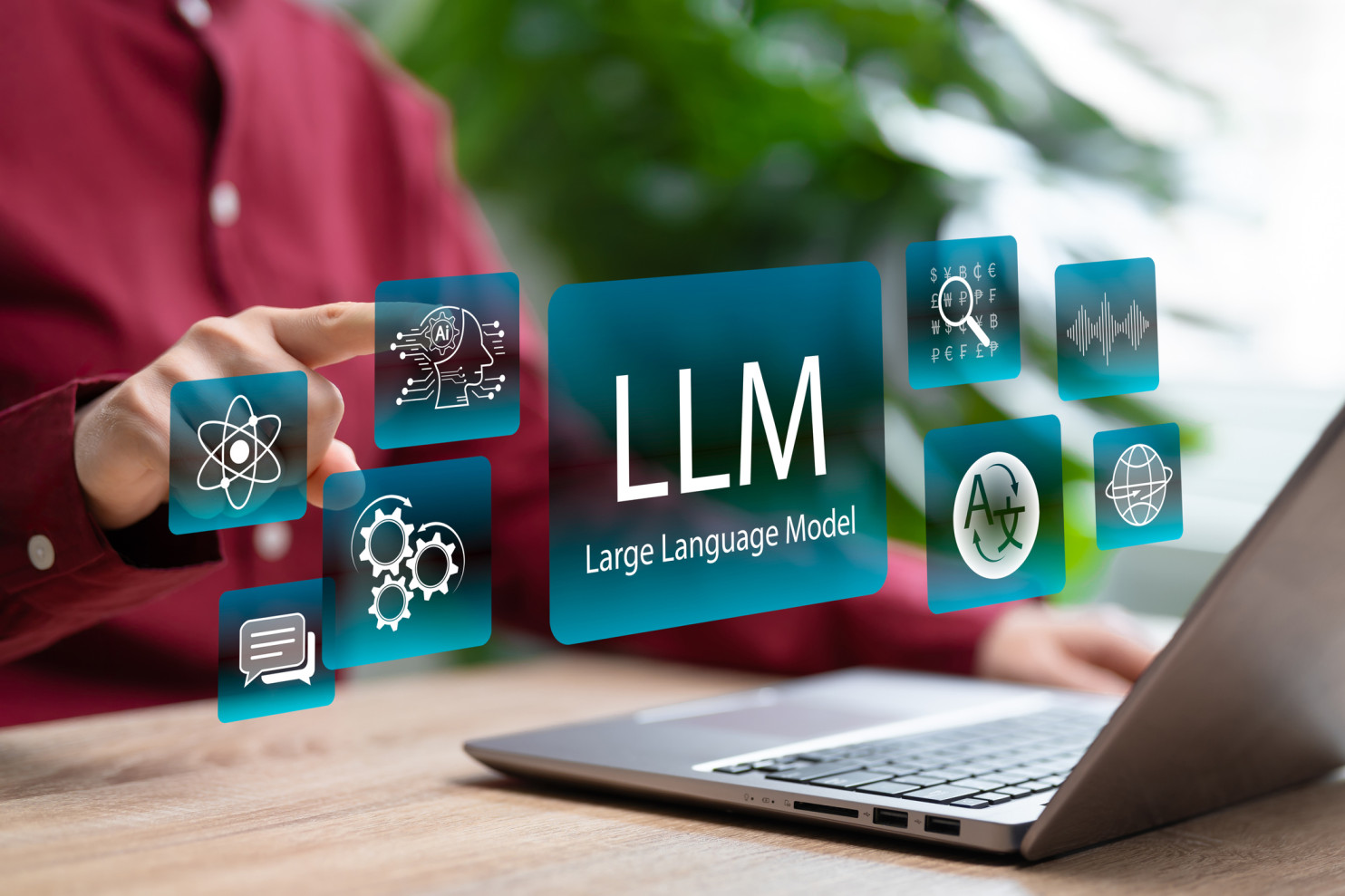
An LLM (Large Language Model) is an advanced AI system designed to understand, interpret, and generate human language. Trained on massive amounts of text, an LLM learns grammar, concepts, knowledge patterns, and even reasoning abilities.
At a practical level, an LLM can:
- answer questions
- write articles or emails
- summarise long documents
- generate and debug code
- translate languages
- analyse data
- hold natural conversations
Models like GPT-4, Claude, Llama, PaLM, and Gemini are examples of widely used LLMs powering modern AI applications.
How Do Large Language Models Work?
While LLMs appear incredibly smart, their underlying architecture is surprisingly logical. Here’s how they work.
1. Trained on Vast Amounts of Text
LLMs ingest billions of words from:
- books
- websites
- academic journals
- code repositories
- public databases
- social platforms
This exposure helps them understand language patterns and real-world concepts.
2. Built Using Transformer Architecture
The “transformer” neural network architecture is the key innovation behind modern LLMs. It enables models to:
- understand long-range context
- read and analyse text in parallel
- detect complex relationships between words
- generate coherent and human-like responses
This breakthrough dramatically increased speed and accuracy compared to older AI models.
3. Predict Words and Sentences Based on Probability
At their core, LLMs predict what word should come next in a sentence. But because they have trained on so much data, their predictions feel intelligent, contextual, and natural.
This is why an LLM can:
- complete your sentence
- draft an entire article
- answer complex questions
- explain concepts in simple language
Everything is built on probability, pattern recognition, and massive computation.
Popular Examples of LLMs
Here are some of the most widely used large language models today:
- OpenAI GPT-4.1 / GPT-5 series – Powers ChatGPT, Microsoft Copilot, and countless applications
- Anthropic Claude 3 – Known for its safety, accuracy, and long-context capabilities
- Meta Llama 3 – Highly popular open-source alternative for developers
- Google Gemini 1.5 – Integrated into Google Search and Workspace tools
- Mistral Models – Lightweight, fast models for enterprise and on-device AI
Each offers different strengths in reasoning, creativity, safety, and scalability.
What Can LLMs Do? Key Applications
LLMs now sit at the centre of modern digital transformation. Businesses, creators, developers, and everyday users rely on them for a huge range of tasks.
Business & Productivity
- customer support chatbots
- automated email writing
- report generation
- workflow automation
Software Development
- code generation
- debugging support
- API documentation
- refactoring and testing assistance
Marketing & Content
- writing blogs and social posts
- SEO optimisation
- keyword research
- content briefs and content clustering
Education & Learning
- personalised tutoring
- study notes and explanations
- exam preparation
- proofreading and rewriting
Data Analysis
- summarising datasets
- extracting insights
- creating charts and tables
- answering questions from spreadsheets
The versatility of LLMs is why they’re being adopted across almost every industry.
Benefits of Large Language Models
LLMs deliver a number of powerful advantages:
1. Significant Time Savings
Whether you’re writing content or analysing data, LLMs automate work that normally takes hours.
2. Human-like Understanding
LLMs interpret tone, intent, and context, enabling more natural conversations and more accurate results.
3. Scalability for Businesses
A single LLM can handle thousands of queries, create endless content variations, or support customers instantly.
4. Versatile Across Industries
From healthcare to marketing to software engineering, LLMs adapt to different tasks.
5. Continually Improving
Models improve through updates and reinforcement learning, becoming more reliable over time.
Limitations You Should Know About
Despite their strengths, LLMs still have limitations:
1. They Can Produce Incorrect Information
Known as hallucinations, some outputs may be inaccurate or fabricated.
2. Limited Real-Time Knowledge
Unless connected to live data, an LLM only knows what it was trained on.
3. Potential Bias
LLMs learn from human text, which can contain bias.
4. Privacy Considerations
Businesses must handle confidential data carefully when working with third-party AI systems.
Understanding these weaknesses ensures safer, more responsible AI use.
The Future of LLMs
The next generation of LLMs is expected to bring:
- larger context windows
- stronger reasoning capabilities
- more reliable factual accuracy
- multimodal understanding (text, images, audio, video)
- deeper personalisation
- autonomous AI agents that can take actions
AI will not just assist with tasks — it will increasingly perform them.
Conclusion
Start your journey into the future of AI with confidence. Whether you’re exploring LLMs for your business or looking to leverage AI-powered content and search strategies, partnering with Manifest Website Design gives you the tools, expertise, and technology to grow. Take the next step towards smarter, faster, and more effective digital performance today.

JILLIAN BRANDON
About the Author
Jillian Brandon brings more than 30 years of experience across technology, programming, and digital marketing. With a Bachelor of Science majoring in Computer Science, she began her career working with major organisations including the Australian Stock Exchange, Merrill Lynch, Fujitsu, and Liquid Air in the UK. These roles gave her a strong technical foundation and a deep understanding of how business systems, data, and user experience intersect to drive performance.
Today, Jillian applies that expertise to help businesses thrive in the digital era. As the founder of Manifest Website Design and its specialist brands Trade Up Digital and Rank for Care, she’s at the forefront of SEO and AI development — building smart, scalable systems that improve visibility, efficiency, and results. Her passion lies in using AI-powered tools and automation to help service-based businesses grow faster, work smarter, and stay ahead in an evolving online landscape